The Courage of Jazz

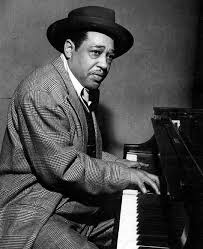
Duke Ellington 3April is Jazz Appreciation Month and April 30th is International Jazz Day.  I plan to celebrate.  Many great jazz musicians have enriched my life emotionally and spiritually.

It takes great courage to be a Jazz musician.  It’s a decision to take an uncharted, unscripted course every day of your life.  To live a life of constant improvisation.  To forsake financial security for the pursuit of unique personal expression.

What’s beautiful to me about Jazz is that it’s a perfect combination of solo’s and collaboration.  It’s the incredible, impossible magic of negotiating individuality while cooperatively creating magic with other equally individualistic artists.  Not ever knowing what the other players are going to do because all are improvising, taking turns stepping into the spotlight with a unique solo and stepping back to play beautifully supporting roles for a new solo.

It’s such a metaphor for life.

One of my favorites, Wynton Marsalis, wrote:

“The foundation of both jazz and democracy is dialogue, learning to negotiate your own agenda within the group’s agenda.  Jazz is like a good conversation.  You have to listen to what others have to say if you’re going to make an intelligent contribution.”

And you see it in action clearly in these YouTube videos.  Watch how they step back and showcase each other, how they appreciate and support each other’s solo’s, how they are united yet utterly, uniquely individual:

Wishing you many great solo’s and many great people to play with in the Jazz of your life!

Love,

Ingrid

Budding Spring

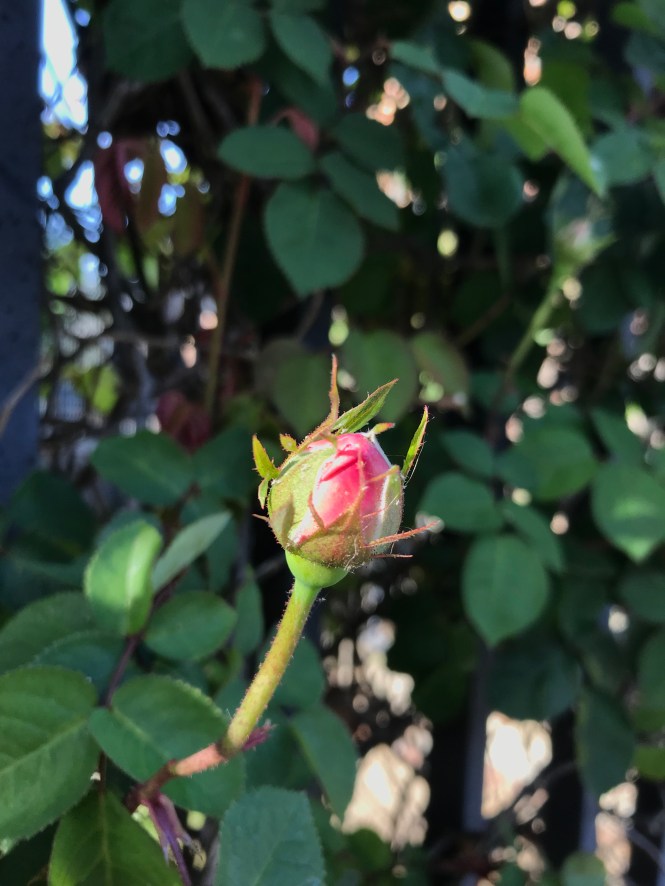
Inspire budding spring rose

I took this photo on an afternoon walk.  Spring infusing the air with spring fever, my co-worker and I left the office walls behind for a jaunt* around the neighborhood.

Bird song, blue sky, and the scent of spring.  We sauntered* smiling and enjoying, noticing and admiring.  Spring refreshing our spirits with every look.

I love the moment in time you see when you look at this rose bud.  Magnificent color and a promise of what is to be.  Certainty that what is to be, is beauty.

That moment in time when your heart skips a beat knowing something good is right about to happen.  That soft explosion of admiration right before it unfurls.

Life is full of these moments.  Not just with flowers, but in the course of living.

When people come to me for training and coaching, this is what I see.  Magnificent color and what is to be when their potential unfurls.  It’s why I love my work, why I’ve never thought of doing anything else for the last 35 years.  Helping potential unfurl is magnificence itself.

The word potential is very old, going back many civilizations, with roots even before Latin.  It has its origin in the word poti, a word from the people of Europe who lived in the 4th millennium BC.  Before any recorded history they created the word poti to mean powerful.

As the word crossed Europe with those of them who became the early settlers of Italy around 300 AD, it gradually turned into the early Latin word potis, which meant powerful, able, capable, possible, and then gradually turned into the Latin word potentialis where it first meant power, might, force.

 Potential is the power within.  You see it in the mighty rose bud, the power within.

Today potential means anything that may be possible.

And I believe anything is.

Spring is the beginning of everything.  Our own creativity, the power we each have within to create, creates all possibilities, even grandeur.

Wishing you a day, a week, a Spring of grand possibilities.  May you be powerful, may your potential unfurl with grand beauty and might.

Love,

Ingrid

* The word jaunt means to wander here and there for pleasure.

* A saunter is a leisurely stroll.

Bold in the pursuit

Historical Society Building

I grew up in and around Philadelphia and love to go back, it’s one of my favorite cities.  A number of years ago during my morning runs, I’d pass this building that has a sign, Historical Society of Pennsylvania.  After a while, I got curious and one afternoon decided to walk in.

There was a geeky looking guy at the front desk and I asked him what was inside.  I couldn’t understand his answer at all.  I’m usually pretty good at understanding what people are telling me, so this was very unusual.   I asked him again, a slightly different way.  He was using terms like primary source documents, and I still couldn’t get any idea what he was talking about , nor what was inside.

After a 3rd failed attempt, I noticed a little sign that said the entry fee was $8 and I thought, What the heck, it’s worth it to find out what’s inside, so to his surprise I gave him $8.

He told me in order to enter I had to surrender my coat and purse to a locked locker and walk inside with absolutely nothing.  Strange.  But I did it.

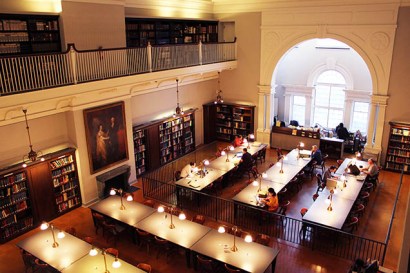
After walking through a gorgeous lobby, the first room I walked into was a large room Historical Society Interiorfull of small wooden filing cabinets.  That’s all that was in the room.  No people, nothing but small filing cabinets.  I opened one of them and saw it was a card catalog full of hand written file cards like they had in libraries before libraries had computers.  In a library each card represented a book and they were in alphabetical order.  You used it to find the location of any book you were Historical Society Card Catalog cabinetslooking for.

So I looked through some of the drawers in these cabinets and saw that they were hand written names of people with dates.  Many of them had more than one name.  There was no one in the room to clarify what they were, and besides that, I was done asking questions, so I looked around and saw a sign saying that you were only allowed to request 3 items at a time and to be prepared to wait for 30 minutes while your items were retrieved.  I had no idea what the items were but I thought, What the heck, I paid my money and I’ll request 3 and see what I get.

Since the cards had names of people, I thought I’d look for names of people I knew.  And since this was a historical society, I looked for the name Thomas Jefferson.  Boy did I ever score.  There were a huge number of cards with his name and dates.  I took one of the forms on top of the cabinet, and one of the little tiny pencils that were next to the forms, and wrote down the information from one of the cards. Then I thought I would look for George Washington and found a big card selection with his name and dates.  Third, I looked for Benjamin Franklin and again scored.  I wrote down the info from each of them too.

So, with my little 3-item form filled out, I walked into the next room which was very large and filled with books.  Completely silent.  The silence was almost noisy. Historical Society Main Room2

There were only two people very seriously reading and writing by the light of old fashioned lamps in the main room, and one person behind a very large counter.  I took my form to the person behind the counter and asked what I should do next and he said I should sit down and wait for my 3 items while he got them for me.  So I sat and looked around, enjoying the silence, enjoying the room, enjoying the 2 serious people, enjoying this completely unusual atmosphere.

The man showed up after about 20 minutes with a tray and 3 manila folders.  He placed them on the table in front of me.  I opened up one of the folders and found myself looking at an original letter by Thomas Jefferson.  I could not believe it.  I picked it up, held it and examined it, thinking this must be a copy.  It wasn’t.  It was the real deal.  It was old paper.  It was old ink.  It had his signature.  Old, but amazingly in great shape.  The other two folders each contained letters by George Washington and Ben Franklin.

Without thinking, I exclaimed very loudly into the silence, “DAMN!!!!!!  This these are real letters!!!!!”  The other 2 serious people in the room raised their heads and grinned at me.

I read the letter by Thomas Jefferson and started swooning.  There’s something about holding the paper that he had held, seeing the actual ink from his pen, reading his extremely unique handwriting, an experience that made him come completely alive for me.  He was suddenly more a real person than I had ever imagined.

Reading the astonishing brilliance and extreme courtesy in his letter overwhelmed me with joy and a profound wish that he were here today.

Reading George Washington’s flowing handwriting in a letter to his cousin was equally thrilling.  George was writing from a hill in New York where he was looking down into the harbor.  As he was writing, he was actually seeing 400 British ships sailing into the harbor to wage war on his troops.  The sheer number of ships was way more than anyone had ever expected, simply overwhelming compared to the scraggly number of untrained troops George had.  When George saw ships kept coming, saw the outnumbering British, he also saw that direct engagement would lead to quick defeat and he decided on his controversial strategy for the upcoming war.

And in this letter, George was explaining his strategy of not engaging the enemy directly, of avoiding fighting, to his cousin, Lund.  This strategy was hotly contested by Congress which believed it was dishonorable to not fight.  George’s strategy proved ultimately to be the winning one.  But in this letter he’s not writing to Congress, he’s writing to his cousin and it’s a whole different feeling to the letter – he’s miserable and he’s just talking to Lund.  He’s also asking Lund to take care of his home and his family, and you realize what he was sacrificing to be on that hill in New York, doing the unimaginable, leading the rag tag US militia against the greatest military force in the world.

Ben Franklin’s squiggly handwriting was a deliciously charming letter to a friend that had me grinning and wishing he was here now, in Philadelphia, enlivening the city as he always did.

They all three became real men to me.  And my wonder for each of them exploded into boundless.

I spent the entire afternoon there, asking for my next 3 items, then 3 more …. I was in another world.  I emerged with complete faith in humanity, overflowing with admiration for these men, the philosopher, the military strategist, the diplomat who, bold in the pursuit of truth and liberty, shaped the freedoms of our country.  Their ability to communicate, to write, is a power to experience first hand.

Thomas Jefferson left behind 36,000 letters.  Knowing that makes me jubilant.

Since then, every time I go back to Philadelphia I love to spend blissful afternoons there and they just about have to kick me out when it’s closing time.  I float out into the street with faith in the rightness of things restored.

The Historical Society has gotten much more welcoming and definitely better about answering people’s questions over the years.  I learned that primary source documents means documents directly from the person who is the source (original letters) written at that time, not letters published in a book, written later or something written about them.  I learned how to ask for items so they bring me a whole box of Washington’s letters and I don’t have to keep asking for 3 at a time.  The staff have become super helpful there.  So don’t feel intimidated if you ever want to go in.

I now have books of Thomas Jefferson’s generation’s letters overflowing my bookcases at home, so I can read them anytime I want.  But nothing beats holding a real letter in my hands and feeling the mind, the spirit and the energy that went into writing it.  It’s magical.  I still can’t believe I can touch and hold these letters in my hands.  This is the only Historical Society I know of that does that.  The Massachusetts and Virginia Historical Societies thought I was nuts when I asked if I could hold original letters while reading them.  Virginia’s said I couldn’t even see them.  So, it’s a real special privilege in Philadelphia.

Thomas Jefferson

Two days ago it was Thomas Jefferson’s birthday.  I want to wish him a very happy one and say Thank you for all the joy your letters have brought me, Tom.  You’ve truly enriched my mind and my life.

Love,

Ingrid


Nor ever cease to smile

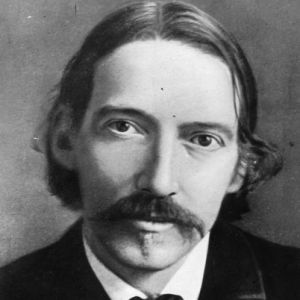
Robert Louis Stevenson

It was night and I was hiking up a mountain in pitch dark with a friend.  We weren’t supposed to be there – the park closed at sunset.  However, all that meant to me was that when we camped there, we would be completely alone under the stars, one of my favorite things in the world.

It was tough going through the dense woods with just a small flashlight.  After climbing about a mile, suddenly there was a rather large structure right in front of me.

I shone my flashlight over it.  It was a large pedestal of stone holding a large carving of a book.   The book of stone was wide open to pages with words carved on them.

I shone the flashlight slowly over the pages and read, one word at a time, a poem.

The words said:

Doomed to know not winter, but only Spring

A being trod* the flowery April, blithely* for a while

Took his fill of music, joy of thought and seeing,

Came and stayed and went, nor ever ceased to smile

Robert Louis Stevenson

*Trod is the past tense of “tread” which means “to walk”

*Blithely means “with no worries, completely carefree”

What a magical moment, in the dark with just a little flashlight, a mile up a mountain, in deep woods with endless stars overhead.

I thought it was the most beautiful poem I’d ever read.  Taking your fill of music, joy of thought and seeing suddenly became the most sublime of pleasures.

I had no idea Robert Louis Stevenson had written poetry, and absolutely no clue what his poem was doing halfway up a mountain in Calistoga, in Napa Valley, heart of the wine country in California.

But one thing I was sure of, it was the perfect place to camp and we did.

After I came down the mountain I did some research and discovered one of the greatest love stories in history.

Robert fell in love with the American Fanny Osbourne at an artist colony near Paris when he was visiting from Scotland and she from San Francisco.  And when I say fell in love, I mean fell in love.

Fanny Osborne

However, Fanny could not have been more off-limits.  She was older than Robert and very married.  In 1878 these were 2 major disqualifiers for any kind of future.

The man Fanny was married to was no prize as he was openly cheating on her and treated her badly.  However, back in 1878, women didn’t get divorced.  So Fanny suffered her insufferable husband.   Up until that moment in France when she fell equally in love with Robert.

Robert was dependent on his father for financial support.  He wanted to make it as a writer but he didn’t have any income to show for it yet. This changed later as he became extremely popular, but at this stage of his life he had no source of income.  So he had nothing to offer Fanny, he couldn’t support them himself and his father would have cut him off immediately if he took up with her.

Sadly, Fanny left for home and a miserable marriage in California, and Robert went back to Scotland and the painful loneliness of losing her.

He couldn’t take it very long.   He suffered.  He needed to be with her.  He wrote a beautiful essay On Falling in Love and this about his feelings:

“Let the man learn to love a woman as far as he is capable of love … Life is no longer a tale of betrayals and regrets; for the man now lives as a whole …”

He made the decision to go to America and live his life with Fanny. He didn’t care what it took.

His father cut him off from any financial support, and so Robert was rather impoverished (not to mention quite ill) when he got on the boat to cross the ocean on his 6,000 mile journey to secure a life with her.

His rough ocean journey was followed by a grueling 12-day train trip across America to San Francisco.

Where he just showed up.  He arranged a meeting with Fannny’s husband and told him he absolutely had to give Fanny a divorce so Robert could marry her.  The husband was surprisingly moved by Robert’s declaration of true love and agreed.

With no home to go to, and nothing but their love, Robert and Fanny were jubilantly married.  Ridiculously happy to be together.

Then Robert figured out their perfect honeymoon.  He heard there was an abandoned silver mine in Calistoga and he figured it would be the perfect place to celebrate their marriage.   It was a beautiful location, in the woods on a beautiful mountain, and because it was abandoned, it was free, no rent.  I’m not kidding – a 3-room cabin bunkhouse by an abandoned silver mine.

Personally, I think you’ve got to love a guy who thinks like this.

Today it takes me a little more than an hour to drive to Napa, but getting to Napa from San Francisco wasn’t nearly as easy back then.   It was a journey.  Robert and Fanny took the ferry across the San Francisco Bay to Vallejo and then the stagecoach up to Calistoga.  This was back in the day when stagecoach robberies happened every week.  They also had Fanny’s two children with them.

The Stevenson family found the abandoned silver mine, named Silverado, after climbing about a mile through the woods, up Mount St. Helena.  It was truly in an abandoned state and needed incredible cleanup to make the cabin livable.  Rattlesnakes abounded.

Robert and Fanny cleaned it up, tossed the rattlesnakes out and had a joyous one month honeymoon.

Robert wrote about it in a wonderful book called Silverado Squatters. A squatter is someone who occupies land or a building without paying for it.

Robert was an extremely private person, so the most intimate details of his relationship with Fanny are left out, but the story of their life on the mountain is beautifully written, irresistibly charming.   It transports you back in time to another world of innocence and love. And the way he describes their crazy stage coach ride to Calistoga is worth the reading alone.

As it turns out, I camped in the exact spot, under the wide and starry sky, where Robert and Fanny honeymooned.  Something about the place was magical, I could feel it was special when I was there.

Since then I’ve read much more of his poetry, his letters and essays, all with great enjoyment.  He’s one of my favorite writers and she is quite a woman.  He called her his “tiger and tiger lily”.  Boring she was not.

Their story is remarkable.  The writer Henry James wrote of them, “They are a romantic lot, and I delight in them.” The best book I’ve read about both Robert and Fanny is The Volent Friend by Margaret McKay and I highly recommend it.

I wanted to write about this particular poem today because April is National Poetry Month, and Robert’s poem describing a being who treads the flowery month of April is still one of my absolute favorites.  I wanted to share the poem with you plus the beautiful story of my discovery as a celebration of both poetry and the April we’re experiencing now.

May you also take your fill of music, joy of thought and seeing, nor ever cease to smile.

Love,

Ingrid


Spring Fever

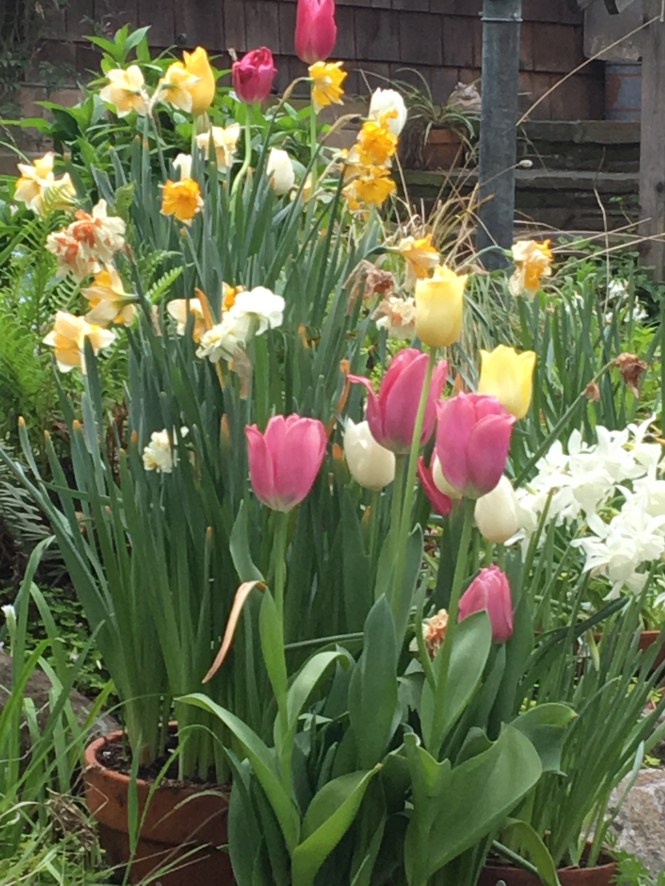
Run Spring Flowers

The word Spring came from Old English and originally meant the place where a stream rises from the ground.  Its meaning evolved into the idea of a source or origin in general.

Then the meaning of Spring evolved into the emergence of new growth, a time when plants and flowers rise up from the ground like magic.

The concept of Spring Fever emerged in 1843, although I’m positive humanity experienced spring fever every year before then, even in ancient times.  Spring Fever was defined as a surge of romantic feelings.

I’m very familiar with spring fever as I get a bad case of it every year.

It’s a sudden feeling of being caged and needing to be free.  A feeling of wanting to throw off heavy, drab-colored winter clothes for T-shirts in light, bright colors like blue, green and yellow.

It’s a feeling of, “If I’m not outside, I’m being tortured.”

Wanting to get on my bike and just ride.  Or perhaps put the top down on my convertible, turn the music up and drive with no particular destination in mind and no timeline for return.

Possibly driving down the California coast on Highway 1, all the way down to the Mexican Baja, then turning around and heading all the way up to Oregon, wind on my face the whole way.  Sleep under the stars and never go back inside.

I’d write more, but the day is gorgeous and I’m going outside.  Who knows what this spring fever will bring?

Wishing you many days of irresistible Spring!

Love,

Ingrid