The love we feel today

Me: “I just called to tell you how much I love you.”

Justine: “What’s wrong?”

Me: “Nothing‘s wrong.”

Justine: “Yes there is. You never call me in the middle of the week. And you sound like you’re about to cry.”

Justine’s my big sister. She was right. I was driving across the San Francisco Bay, on my way home from a new client, a beautiful cemetery that holds extraordinary funeral services. I was helping them develop training for new employees.

Up to this point, I had spent very little time in cemeteries or at funerals. It was a strange new environment to be working in. I expected it to be sad, gloomy, depressing. I expected the people to be dour and unsmiling. Altogether very grim.

It was the opposite. They were the warmest, friendliest, nicest, most caring clients I’ve ever had in my life. Their smiles and hearts were kind and sincere. I fell in love with them immediately and love them still with all my heart.

While I was there, I saw many families, many friends, overwhelmed by the raw, gut-wrenching grief that comes from the uncaring, unrelenting finality of never seeing someone they loved again. I was deeply moved by the uncontrollable outpouring of hopeless, heartbreaking love that I saw before me.

Over and over again I saw something that really struck me. We tell each other all the time, “I love you.” “You are important to me.” “I really appreciate you.” “I’m grateful to have you in my life.”

These are weak and tame expressions compared to the full force of love for a person that we feel at funerals.  It was only at these funerals that I saw people fully express how much a person mattered to them, how irreplacable they were. Somehow it doesn’t quite hit any of us until the complete, utter, never-ending loss of it.

And that made me turn inward. I’ve always had a very small family: mother, father, sister and aunt. My parents had me late in life. They and my aunt passed away, profound losses in my life. Leaving my sister and me.

Throughout our lives, my sister and I have fought like cats and dogs, yelled, argued and scraped, something it seemed we would never grow out of. We’ve also laughed and shared secrets, had endless conversations, cried on each other’s shoulders, helped each other through crisis. But I had taken her for granted my whole life.

And that’s what I saw at these funerals. What happens when you lose someone you’ve had the luxury to take for granted.

And suddenly it hit me, how much I loved her, how important she is to my life, how much I needed her, and all the beautiful things about her that I absolutely adore, admire and can’t live without.

Justine was a very successful trial attorney who is now a gifted writer on the verge of having her first brilliant novel published.

Driving over the Bay Bridge, I was overwhelmed by a tsunami of happiness that she was alive. I kept thinking, “She’s alive! She’s still here! I have her!”

The gratitude I felt overpowered me. After I crossed the bridge, I pulled over by the side of the road, filled with emotion, and called her.

It happened a good number of times. I would call Justine driving home, overwhelmed with love for her, always in the middle of the week. It got to the point where she would laugh and ask, “Did you just leave the cemetery?” I would say, “Yes” and we would both laugh. But the love was true.

That was a number of years ago. But every single day since then, I wake up grateful that I still have Justine. A gratitude that fills my heart and is too deep and too powerful for words.

I told Leonora, who is responsible for cemetery arrangements, how much the experience of working with all of them has changed me. She smiled with complete understanding. She knows well the magnitude of gratitude for the living that working in a cemetery and arranging funerals awakens. Funerals bring out depths of emotion people don’t experience in their ordinary lives. Leonora gets to experience them every day.

Leonora asked me, “Ingrid, do you have any special dresses, jewelry, or shoes hiding in the back of the drawer or in the back of your closet for a special occasion?” I laughed and said, I never thought about it, but yes I do!”

Leonora said, “Take them out and wear them. Every day is a special occasion. All the time I see people who have saved their ‘best things’ for a special occasion, and they die never getting to have lived the full joy of them.”

Those words meant more to me than just what’s in my closet. Her words spoke to me of the emotions that I have that are unexpressed, and the love that I have that is not fully experienced or expressed. But a funeral would bring my life to a complete halt and I would be overcome.

Since then, I let myself be overcome today and every day by the love I have for others.  I don’t want to wait and have that moment when it’s too late.

I love my sister with a fierce love. I am profoundly grateful she is alive and I will enjoy Thanksgiving with her. We each have many people in our lives who love us, our lives are filled with wonderful people who love us. But there’s nothing like the love of family. And there most certainly is no one like my Justine.

I wish you a very joyous and love-filled Thanksgiving. And I give you Leonora’s wise advice:  If there’s anything in your closet you’ve been saving for a special occasion, including your closest emotions, today is that special occasion. Take them out and start wearing them, experience the living joy of them today.

Richard’s Garden

On my run this morning, there was Linda coming up the hill with walking sticks.

Me: “I haven’t seen you for a long time! It’s great to see you!”

Linda: “Five months. It’s been five months. Richard got me walking again. He convinced me I could do the hills.”

Richard is a neighbor who always brings the true meaning of life to the surface of my awareness. Turns out he does it for everyone.

Linda told me about her bad fall five months ago. She broke her shoulder and her leg in four places. Her absence for a couple of months inspired Richard to go over to her place where he found her sitting in the same chair day after day.

Linda lives alone and was avoiding going to doctors because an ambulance costs her $250 each way. Richard took her to her doctor visits. And gradually convinced her to step outside. He brought her back to life. And now she was taking the hills. Rather energetically. And smiling.

Linda is older. Richard is in his mid-80’s and even older. He kayaks five days a week with his daughter and is strong as a bull. Filled with life force.

Richard’s colorful garden makes us all happy, flowers changing with the seasons. He shares his tree’s mouthwatering plums with all of us.

Richard grew up in the Bay Area and told me stories about how he and his brother would take their boat and go out fishing in the San Francisco Bay when he was young. Sometimes they would catch a large shark, and the shark would take off with their little boat racing across the bay at great speeds. Richard said it was one of the best joyrides of his life and it happened often.

Richard always has stories. And his stories always remind me of the true meaning of life.

One neighbor like this brings the whole neighborhood together.

Richard lives about a mile from my house. But it seems that everyone on the route knows Richard and has a Richard story.

Richard in his 80’s has more energy than most 20-year-olds. And more wisdom than most philosophers.

It’s a joy to see Linda again. She looks radiant. She said to me, “Thanks to Richard, I am reverse-aging. All this stuff about growing old, it all comes down to what you believe. And Richard made me believe again.”

Just hearing the story made me believe again too.

May you have a Richard in your life. Or possibly you are one. Thank you.

Love,

Ingrid

What did we fight for? The difference between liberty and freedom

Why was the American Revolution in 1776 inspired and started by a group of patriots in Boston known as the Sons of Liberty and not the Sons of Freedom?

Why does the Declaration of Independence say that we have we all have equal rights to “life, liberty and the pursuit of happiness”? Why not freedom instead of liberty?

Why does the Preamble say the explicit purpose of the US Constitution is to “secure the blessings of liberty to ourselves and our prosperity”, and not “the blessings of freedom”?

Did we fight for liberty? Or did we fight for freedom? What’s the distinction between them?

As often happens, good dictionaries, especially big heavy fat old ones, have answers to this and other philosophical questions. Thank God I have a large bookcase of them so I can delve into the meaning of life and emerge wiser.

Freedom is being able to be anything and do anything in the absence of all restraint.  It’s complete absence of control and restraint on who we are, our actions and, especially, regarding our consequences.

Liberty is the state of being free from SUPPRESSIVE or OPPRESSIVE or CRUEL or UNJUST or DISAGREEABLE or OVERLY FORCEFUL control or restrictions from government on our way of life, our actions or political views.

Liberty ASSUMES restraint is essential. It assumes our actions and our consequences matter.

Liberty is freedom from ARBITRARY restraint, which means freedom from unpredictable or unreasonable power used against you, freedom from restraint or actions by government that are unjust or happen without your agreement or are out of your control.

Liberty means control that you DO agree with, control that is predictable, reasonable, makes sense to you and that you do CONSENT to.

If we had total freedom in this country, people could murder, steal and do other horrific crimes with no restraint.

Liberty gives tremendous freedom, but not to do that.

When Navy sailors have “Shore Leave,” it’s called liberty, not freedom, because they have to come back to the ship and they better not get into (too much) trouble.  If they didn’t have to come back to the ship at all, you could call it freedom.

Understanding and consent are vital to liberty.  That’s why we elect our representatives and vote for laws.  Our vote is our consent, or lack of it.

So, liberty is a BALANCE of freedom and control.  It recognizes that some control is necessary, but makes a SHARP distinction between good control and suppressive control.

Liberty gives you tremendous freedoms and yet depends on control that helps you PROSPER and THRIVE, not control that suppresses you. It’s control that you AGREE with, laws that you agree with, government that you agree with, politicians who REPRESENT you.

Our vote tells the government what we consider to be good control and what suppressive controls and restrictions we do not consent to.

Liberty requires constant attention and protection to keep the balance of control and freedom in a harmony that enables all life to thrive.  It is easily lost.  You can have too much freedom.  You can have too much control.  It’s an ever-changing balance as civilizations rise.  And civilizations fall when this balance is overwhelmed.

This is where responsibility comes in.  Freedom is an absence of responsibility.  Liberty is a shouldering of responsibility. 

A study of history demonstrates that liberty is easily lost. 

Our history also paints in vivid color that liberty is so important to us, to human kind, we will fight … and die … for it. 

You can see that liberty depends on intelligence, education, and a good sense of right and wrong.  It relies on the ability to do the greatest good for the greatest number because real liberty belongs to all and it is only in this way that the precious balance between control and freedom can be maintained.

You can see it takes all of us to create it.

You can see liberty requires perceptive judgment and an ability to predict consequences.

We fought for liberty, not freedom. The Founding Patriots counted on future generations, on us, to have that essential intelligence, education and good moral sense of right and wrong required to keep it going. All of our Founding Patriots knew that if we lost intelligence, education or moral sense, we would lose our liberties.

That is WHY Noah Webster dedicated many years of his life after the ratification of the US Constitution in 1788 to creating the incredible and brilliant 1828 Dictionary of the American Language.  He believed that if we forgot or lost the true and complete definitions of words, we would lose our political and religious liberties.  There’s a great topic of discussion in itself! 

And, yes, I owe a lot to him for helping me understand this distinction between liberty and freedom, words he so carefully and lovingly defined and distinguished.

The Revolutionary Era, when we won our liberty, happened during what is known as the Age of Enlightenment.  This was an age from the late 1600’s through the 1700’s marked by great new philosophical ideas, not just in politics, but in every facet of culture and economics.

It was also known as the Age of Reason.

Our Founding Patriots intently studied and were shaped by the great philosophers who came before them and created this age.  As a result, their fundamental belief was NOT that they were creating a government “by the people.”  Our Founding Patriots had studied the democracy of ancient Greece and decided that a government “by the people” resulted in uncontrollable passions and emotions that led to unreasonable wars, bloodshed and mob rule.  No, this was going to be different.

The Founding Patriots founded the United States not on the principle of government by individuals, but on the principle of government by ideas.

Leaders are interchangeable.  And we want them to change often.  Our Congressional Representatives are only elected for two year terms.

When you are united and governed by GREAT ideas, your leaders can change pretty easily.

This was to be government not by individuals, but by ideas, reason and power derived by consent. 

It was the Age of Reason.  We are to be governed by reason.  Not emotions.  Not passions.  Not opinions.  Not force nor weapons.  Not greed or desire.  Not personalities.  But by our ability to reason, to communicate, to collaborate and to come to intelligent agreement.

Our Founding Patriots believed in all this: humankind’s ability, our ability, to reason, to communicate, to collaborate, to come to intelligent agreement, and, most importantly, to do the right thing.

This was the real revolution in politics and government.

And the purpose of government was intended to be limited. How else could our freedoms be preserved? The purpose of our government is to secure and protect our fundamental human rights which we all have in equal measure, no one individual or group has more rights than any other.  And to keep control and freedom in a beautiful balance and harmony so that we, so that all life, can prosper and thrive.

The English philosopher who GREATLY inspired and influenced our Founding Patriots was a #1 bestseller for 100 years in those days, everyone was quoting him. This is the Englishman John Locke who wrote in the late 1600’s.

Locke wrote:

“The end of law is not to abolish or restrain, but to preserve and enlarge freedom.  For in all the states of created beings capable of law, where there is no law, there is no freedom.”

Our government was a brilliant experiment in a BRAND NEW type of control, one which ENLARGES freedom.

In memory and gratitude for all who have fought, have written and have spoken, to secure our life, liberty and pursuit of happiness, our freedoms, our right to spiritual, emotional and material prosperity … I stand tall, salute and thank each of you.  Your message is not lost.

There’s a tremendous amount of philosophy in the foundation of our government. Philosophy that is intended to unite us, philosophy about our basic goodness.

As the great political philosopher John Locke wrote:

“To love our neighbor as ourselves is such a truth for regulating human society, that by that alone one might determine all the cases in social morality.”

May we continue strong on this path to enlightenment. To liberty.

With love,

Ingrid

A man in love

Happy 281st Birthday to someone very special to me!

The picture above is Maria Cosway, and no, it’s not her birthday. It’s Thomas Jefferson’s, a man who was passionately in love with her in Paris in 1786.

Maria was married to a man, Richard, who was blatantly unfaithful to her, but who was very certain in their day and age that she could never leave him. Richard was interested in every woman except the extraordinary beauty who was his wife.

Maria was an intelligent, well-educated, passionate woman, a gifted artist who grew up in Florence, Italy and brought the best of and the liveliness of Italy into all her conversations.

Thomas Jefferson’s head told him not to love Maria. His heart told him otherwise. His head told him to detach himself, to treat her dispassionately, as if he were a monk or a philosopher. His heart said no.

When Richard and Maria were leaving Paris for London and Jefferson was in extreme anguish about seeing her leave, he said goodbye to her before she drove away in her carriage like this:

“Having performed the last sad office of handing you into your carriage at the Pavillon de St. Denis, and seen the wheels get actually into motion, I turned on my heel and walked, more dead than alive, to the opposite door, where my own was awaiting me.”

Then, at home, he wrote Maria a very long letter that started with:

“Seated by my fire side, solitary and sad, the following dialogue took place between my Head and my Heart.”

The dialogue between Jefferson’s Head and his Heart went on for pages.

It’s a dialogue my head and heart have had many times and I understand it well. The heart captures it here:

“Heart to Head: Let the gloomy Monk, sequestered from the world, seek unsocial pleasures in the bottom of his cell! Let the sublimated philosopher grasp visionary happiness while pursuing phantoms dressed in the garb of truth! Their supreme wisdom is supreme folly: and they mistake for happiness the mere absence of pain. Had they ever felt the solid pleasure of one generous spasm of the heart, they would exchange for it all the frigid speculations of their lives, which you have been vaunting in such elevated terms. Believe me then, my friend, that that is a miserable arithmetic which would estimate friendship at nothing, or at less than nothing.” 

Maria and Tom only saw each other very briefly again once, but were friends all their lives, their friendship deep to begin with, deepened even more over time. They wrote to each other until the end. Maria went into an Italian convent after Richard died. She loved Tom deeply and her letters are filled with passionate appreciation and friendship. One of Tom’s last letters to Maria when he knew he didn’t have much time left, written 34 years after they met and sent across a very distant ocean, included this:

“You have many good years remaining yet to be happy yourself and to make those around you happy. may these, my dear friend, be as many as yourself may wish, and all of them filled with health and happiness will be among the last & warmest wishes of an unchangeable friend.”

To read the full Dialogue Between My Head and My Heart (it’s beautiful), you can go here: https://founders.archives.gov/?q=%20Author%3A%22Jefferson%2C%20Thomas%22%20Recipient%3A%22Cosway%2C%20Maria%22&s=1111311111&r=2

On this beautiful Spring day, I wish you many friendships and much love to fill your own heart. And may your Head enjoy them as well!

Love,

Ingrid

A lot of strolls

I sat down next to him.  Rittenhouse Square, lovely little city park in the middle of Philadelphia.

Cold December day. A break from all the doing. Needed a park bench to just sit and be.

Old man, nicely dressed.  A peaceful sadness about him, looked like he’d been sitting there for a while and had no plans to get up, lots of space on the bench next to him.

I sat down.

We both sat and looked out, watched people waiting for their friends, meeting each other by the fountain in the center of the square, warmly greeting, laughing, walking away together.

Robust, constantly moving stream of purposeful-looking people walking by, on their way to a busy somewhere.

I relaxed and sat, just watching, enjoying all the people around me. So nice to feel like I didn’t have to do anything, could just sit and look out.

I was also enjoying the company of the man next to me, feeling his presence and enjoying the humanity it made me feel. I could feel him looking out and watching too.

Without turning his head, he spoke. “Why does everyone walk so fast?”

I gave it some thought, and simply said, “Good question.”

That satisfied him, and he nodded.

Companionable silence.

Then he: “What is on their phones that they keep looking at them?”

I wondered if he owned a cell phone.  I watched everyone in the Square for a moment. Everyone who was standing and waiting for someone was checking their phone. Even the people walking by were often checking their phones.  

I thought about it, and told him, “Another good question.”

Head nod, satisfied.

After a little peaceful silence, he quietly said, “They don’t look up anymore. They don’t look at faces. They’re not seeing any of the decorations.”

I turned my head to look at his face. I said, “Too true.” He turned his head to look at me and smiled. I smiled too.

We went back to watching people. Somehow connected.

I don’t know what made me ask, I somehow knew it was. “Is Rittenhouse Square a special place for you?”

He, a little laugh, a big sigh, said, “Very special.”

Long silence. Then, “My wife and I took walks around the Square every day. But we didn’t march like these people. We strolled. We talked. We looked at everything. We enjoyed seeing it all. especially this time of year.”

I was very touched. “That sounds very special. Married a long time?”

“53 years.”

Me: “That’s a lot of strolls.”

Smile from him, “Yes, a lot of strolls.” Silence as he pondered. Quietly, but with tremendous feeling, “A lot of strolls.”

I didn’t ask, I knew she was gone, I didn’t want to open up a wound.

Peaceful silence.

He said, “I miss her every day.”

I thought about his strolling with a woman he loved every day for 53 years and bit my lip to keep from crying. Didn’t help.

I waited until it subsided and simply offered, “I can understand. I can imagine you had a beautiful marriage.”

He smiled, “We got along. I was a really lucky guy. She was something else. Everyone wanted to marry her. No idea why she chose me but I always felt like luckiest guy in the world. We never argued. Three kids. Good kids. Now I have grandkids. I love them all.”

Tears coming one after the other down my face, no tissue to wipe them, I used my sleeve.

“Thank you for telling me, that’s beautiful.”

He smiled.

We sat peacefully, looking out.

The smile stayed on his face.

He turned to me, like an old friend who doesn’t want to go, he said almost reluctantly, “They’re waiting for me, I need to go. Will you be back?”

“I’m only here for the holidays, but while I’m here, I come back a lot. Maybe I’ll see you.”

“I would like that.” Smile. “You remind me of her. She cried really easy too.”

That set me to blubbering all over again.

He smiled. “Next time we can stroll around the park.”

“I would like that.”

He sat and looked out a little longer until I stopped crying. Somehow this little conversation had brightened him up. He didn’t seem so sad.

And as I stopped crying, I was filled with the happiness of knowing a man who loved to stroll every day with his wife, and could do it again, and again, and again, for 53 years. I couldn’t help it, I started smiling.

He saw that, stood up and smiling too looked into my eyes, his were old, kind eyes. I was filled with an inner peace, and I could see he was also.

He said, “It was nice talking to you.”

“It was nice talking to you too.”

“See you.”

“See you.”

I get home. I’m asked, “How was your walk?”

“It was really good. It was more like a stroll.”

“That’s nice. Where did you go?”

“Rittenhouse Square.”

“I love that place.”

“Come with me tomorrow.”

“I would love to. And there’s a nice place right on the Square where we can have tea. Great place to watch people, and everyone is dressed up this time of year.”

“Perfect. There’s a really nice old man who might be there also. I think you’ll really like him. He came to the Square every day with his wife, they strolled around the square every day, for 53 years.”

“She’s gone?”

“She’s gone.”

“I think I’ve seen them. They were always dressed up really nice. And she always took his arm. They were always talking to each other. They look like they really cared about each other a lot. … So sorry she’s gone.”

“Yeah, me too. But he has wonderful children and grandchildren that make him happy.”

“That’s always a blessing. Well, let’s go tomorrow. I hope he’s there. He sounds nice.”

“Perfect. Me too.”

Love,

Ingrid

The invitation 3,000 people accepted

Sometimes humanity is lucky enough to have a single individual who is able to break through all the preconceived notions of despair, hopelessness, and impossibility that overwhelm the rest of the world. They release in humanity the most beautiful of forces, the force of love and harmony.

At that moment we see with great clarity what being human really means.

At that moment, we find what we are seeking, what seemed impossible the moment before.

We reach that distant shore that we as humanity long for.

This is such a story.

I would like to show you an exhilarating mass performance of the song “One Day,” sung in English, Arabic and Hebrew.

The person who made it happen is reggae singer Matthew Paul Miller.

In 2018 he issued an invitation for people to come together and learn the song “One Day” with him in less than an hour. 3,000 people showed up, none of whom had ever met before. They had no reason to come together other than one man’s invitation to do so.

Not only did they all learn the song, they also learned to sing and harmonize the song in three different languages.

Here is the video of 3,000 Muslims and Jews singing together in English, Arabic and Hebrew.

That is all well and good, you might say.  But you may also think that only a silly optimist would believe that song could be a way to accomplish peace, to release a people from hatred and violence, that song is woefully insufficient as a force against evil.  I understand that.

But there are 3 countries that have another perspective and I heard all about it from my parents growing up.  They came from Lithuania (across the sea from Sweden), one of 3 Baltic countries that was suffering deeply from Soviet occupation and suppression for much of my parents’ lives.

The other 2 countries are Latvia and Estonia.  All 3 countries had military forces that were weak.  All 3 countries had been completely overpowered by the Soviet might and merciless inhumanity. 

300,000 Lithuanians were deported to the depths of frozen Siberia where most of them died.  80,000 were executed and buried in mass graves.  190,000 were thrown into brutal jails.  This is devastating to a country that has a population of only 3 million.

The same was happening in Latvia and Estonia.  They had nothing to fight back with.  Nothing.

Except song.

The little-known story is beautifully told in a film called The Singing Revolution.  The film was made about Estonia, but very similar was happening in all 3 countries. 

The Soviet empire was powerless against song.  In the battle of song vs bullets and tanks, song was victorious.

The film is broadly available if you like gripping true stories about human beings who make the impossible happen. https://www.imdb.com/title/tt0954008/?ref_=ttpl_ov

What does it take to create harmony?

It always starts with the individual.  Individuals are the ones who ultimately transform groups, countries, and even empires.

Harmony, love and beauty have a power and a force all their own.

They are powerfully present as potential to be released in every one of us, every minute of every day. They have no borders. They have no limits.

I believe in the infinite potential of humanity. I believe in the infinite potential of you.

Sending you my warmest wishes for a joyous and love-filled, Thanksgiving celebration, not just to my American friends but to all around the world.

I am thankful for all of you who are reading this.

Much love,
Ingrid

I am not such a man …

Today’s story is from long ago, 1682 as a matter of fact. Much has been written about the first Thanksgiving and the debt and gratitude owed to the Native Americans who helped the struggling European settlers who were new to this land.

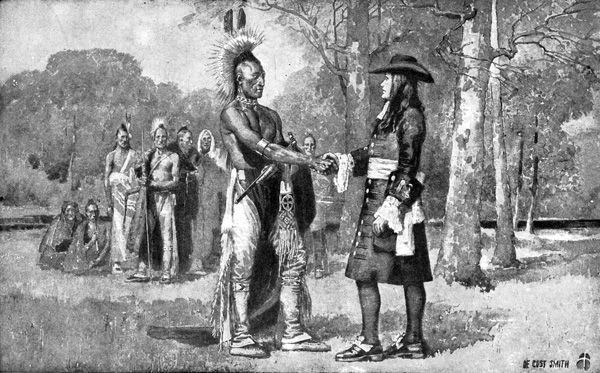
A little known story is of the Quaker William Penn who came from England in the 1600’s to escape severe religious persecution (he’d been thrown in prison twice already for his beliefs).  His dream was to form a unique community of religious tolerance and inclusion in the new world, the first of its kind in the history of humankind. 

The Lenape Native American tribe was already living on the land where Penn wanted to settle.

Before starting out on his journey across the sea, Penn wrote eloquently and respectfully to the Lenape, insisting that his words be meticulously translated into their language:

“I am very sensible of the unkindness and injustice that hath been too much exercised toward you by the people of these parts of the world, which I hear hath been a matter of trouble to you and caused great grudgings and animosities, sometimes to the shedding of blood … But I am not such a man …”

In his letter, Penn went further, and surprised the Lenape with words utterly unexpected: 

Instead of simply announcing his upcoming arrival, Penn respectfully requested the Lenape’s consent. He asked if they would consent for him come, to put down new roots and to bring others who would also make a new home in this land, to create a new city, Philadelphia, the City of Brotherly Love (Greek:  Phileo – “love” and Adelphos – “brotherly”):

“I desire to enjoy it with your love and consent, that we may always live together as neighbors and friends.”

As a result of his beautiful expression of purpose for unity, the Lenape welcomed Penn when he arrived. 

Penn attended their Councils, studied and learned their Lenape language in less than a year so he could communicate with them directly, without the cumbersome intervention of a translator.  He won their trust.  Penn paid the Lenape for their land and only took land that was agreeably paid for. 

Inspired by Penn, Tamanend, the Chief of the Lenape, studied and learned English and refused to participate in any campaign waged by the Iroquois to drive out the Europeans. 

It turns out the Quakers and the Lenape had much in common.  Just as the Lenape believed they had a kinship with all things, Quakers believed in universal brotherhood derived through the spark of the divine, or Inner Light, within all people.

As a sign of their mutual trust, Penn and Tamanend together signed a beautiful peace treaty in a remarkable ceremony by the banks of the Delaware River.  There, in the Lenape language, Penn said:

“We meet on the broad pathway of good faith and good will; no advantage shall be taken on either side, but all shall be openness and love … We are the same as if one man’s body was to be divided into two parts; we are all one flesh and blood.”

Tamanend, the Chief of the Lenape replied:

“We and Christians of this river have always had a free roadway to one another. Though sometimes a tree has fallen across the road, yet we have still removed it again and kept the path clean and we design to continue the old friendship that has been between us.

“We will live in love with Onas (Penn’s Indian name) and his children as long as the creeks and rivers run and while the sun, moon, and stars endure.”

As a result, the Native Americans and the European settlers in this area enjoyed an unparalleled 70 years of unbroken peaceful relations, trade and co-existence. 

The only thing that really divides people is an inability to respectfully communicate. It’s not our beliefs, our differences, our desires, or our cultures, but our inability to respectfully and successfully exchange ideas about them.

When you are able to communicate, you can’t be divided.

A person with a real ability to communicate is empowered to cross over to different cultures, different convictions and faiths, and make real friends and allies, to create a world where you are helping others and they are helping you.  Where real exchange begins.

William Penn was such a man.  And so was Tamanend, Chief of the Lenape.

These men are living examples that with the ability to communicate comes a real exchange of ideas and, with that, we are able to create real understandings, with which we can create unity and union.  We are able to unite our existences, unite our efforts, unite our powers, unite our minds, unite our spirits, unite our hearts.  Unite our forces.

To me that’s what Thanksgiving is all about. Spending time with those with whom we enjoy the most fulfilling communication, the deepest emotional and spiritual unions, with those special people with whom we can communicate and who most nourish our hearts and our souls. Enjoying the blessings successful communication and human relations bring.

I wish you a very beautiful Thanksgiving. I personally am very grateful for you. Every time I reach out and communicate and know that my communication has been received, I feel a well of gratitude.  Thank you for being there.

Love,

Ingrid

In deep conversation with Jimmy and Tom

In public they referred to each other as, “Mr. Madison” and “Mr. Jefferson”.  They began their many letters to each other with the grave formality of, “Dear Sir”

But in private, they were Jimmy and Tom.

They met in 1776 and became the best of friends instantly.  They enjoyed an unshakable 50-year intellectually and emotionally satisfying friendship that had tremendous significance not only for their own generation, and not only across several continents, but for, as they called them, “the millions yet unborn” who would live and discuss their words, their philosophy and their decisions for hundreds of years after they were written.

The three volumes in the photo above are called The Republic of Letters.  They contain the 1,250 letters Jefferson and Madison wrote to each other.  For the most part, these are long, long letters going on for pages and pages.  The letter Madison wrote to Jefferson about the Constitutional Convention in 1787 was 17 pages.

I am deeply immersed in these letters.  They read like a fabulous novel.

Most people read books ABOUT people.  I’m not crazy about that.  I like to read what’s called “primary sources” – words directly communicated by the person themselves.

Let me put it this way.  I would much prefer to spend three hours talking TO you than spend three hours with someone else talking ABOUT you (that would drive me nuts).  I don’t like talking about people.  I like talking to people.

They would have agreed with me on this.  Madison wrote, “It has been remarked that the biography of an author must be a history of his writings.  So must that of one whose whole life has in a manner been a public life, be gathered from his manuscript papers on public subjects, including to as well as from him.”

Jefferson agreed wholeheartedly: “The letters of a person, especially of one whose business has been transacted by letters, form the only full and genuine journal of his life.”

These Republic of Letters are extraordinary.  I find a level of intelligence here that I am constantly seeking.  Reading them I directly get the spirit of the men, of the friendship, of their state of mind, of their ideas, of the time in which they lived.  I feel their personalities.  I feel them.  They make me laugh.  They make me think.  They make me look.  They make me take sides.  They teach me.  They develop my acumen, my ability to reason, to think critically, to make good judgments.

Their letters contain everything you would expect from best friends.  They shared their life experiences, their emotions, their sympathies, their likes and dislikes, their views, their passions.  They had lively arguments, they gave each other advice, they sent each other gadgets and plants.  The letters are vibrant with lives lived during one of the most critical and exciting periods of history.  They treasured each other’s thoughts.

When Jefferson sent Madison one of the first copies of his highly acclaimed book Notes on the State of Virginia, he wrote him, “I beg you to peruse it carefully because I ask your advice on it and ask nobody’s else’s.”

They collaborated and worked together.

Jefferson had written a Bill for Establishing Religious Freedom. 

In the preamble he argued that:

“Almighty God hath created the mind free; that all attempts to influence it by temporal punishments or burdens, or by civil incapacitations, tend only to beget habits of hypocrisy and meanness … that our civil rights have no dependence on our religious opinions, any more than our opinions in physics or geometry … and finally, that truth is great and will prevail if left to herself, that she is the proper and sufficient antagonist to error, and has nothing to fear from the conflict unless by human interposition disarmed of her natural weapons, free argument and debate; errors ceasing to be dangerous when it is permitted freely to contradict them.”

These ideas were very controversial and, encountering much opposition, Jefferson was unsuccessful in getting the necessary votes for adoption.

While Jefferson was in France in 1785, Madison successfully fought for passage of the Bill in the Virginia Assembly.  He gleefully wrote to Jefferson of his victory, “The enacting clauses passed without a single alteration, and I flatter myself that I have in this country extinguished forever the ambitious hope of making laws for the human mind.”

Jefferson celebrated his friend’s achievement: “The Virginia act for religious freedom has been received with infinite approbation [approval] in Europe and propagated with enthusiasm.  In fact, it is comfortable to see the standard of reason at length erected, after so many ages during which the human mind has been held in vassalage by kings, priests and nobles; and it is honorable for us to have produced the first legislature who has had the courage to declare that the reason of man may be trusted with the formation of his own opinions.”

Like many friends, their spectrum of topics was far-ranging.  After writing about very serious political issues, Jefferson could end one of his letters with something like, “PS  Could you procure and send me a hundred or two nuts of the Pecan?  The seeds of the sugar maple too would be a great present.”

If you ever ate pecans from the South, you would certainly understand this request! J

Madison was deliriously happy when Jefferson sent him phosphorescent matches.

In short, they wrote about everything.  Their letters ended with the elegant manner of the time, “I am with very sincere esteem, Dear Sir, Your friend and servant …”

Reading their letters takes me through a long lifetime of hopes, dreams, aspirations, despairs, victories, loves, losses and deep reflections.  It takes me through a period of history as an eye witness to the events of the day.  I’m seeing what they see.  I’m feeling what they feel.  I’m understanding as if I were there.

In this beautiful 50-year friendship there were many, many disagreements.  They each sought the other’s views and their friendship was big enough to accommodate their disagreements. 

Jefferson was passionately disappointed the US Constitution was ratified in 1788 without a Bill of Rights, a shortcoming he felt was severely destructive of liberty.  Madison in vain justified and tried to convince him to understand its absence.  Their debate is respectfully conducted and enlightening to read.

In all of 50 years, there was never a conflict, never an unpleasant argument.  Not a one.  They understood each other, accepted each other, valued each other, respected each other, loved each other, and needed each other.

After Jefferson died, 10 years before Madison, Madison wrote, “We are more than consoled for the loss … by the assurance that he lives and will live in the memory and gratitude of the wise and good, as a luminary of Science, as a votary of liberty, as a model of patriotism, and as a benefactor of human kind.  In these characters, I have known him, and not less in the virtues and charms of social life, for a period of fifty years, during which there has not been an interruption or diminution of mutual confidence and cordial friendship, for a single moment in a single instance.”

Several months earlier Jefferson had written to Madison, “The friendship which has subsisted between us, now half a century, and the harmony of our political principles and pursuits, have been sources of constant happiness to me through that long period.  To myself you have been a pillar of support through life … be assured that I shall leave with you my last affections.”

Sitting in the Sunday sunshine on my patio with cats scampering about, bees enjoying the lavender, butterflies dropping in for a visit and hummingbirds stopping by for lunch, I am grateful to be invited in by Tom and Jimmy’s letters to enjoy the luxury of such a friendship. 

It greatly expands my vision.  I clearly see what happens when two great beings, two great intellects, form a life-long friendship that strengthens and enhances each of them.  A friendship that fulfills a greater purpose than most friendships entertain, a purpose to make a better world and the belief that we, as individuals, can make a difference far beyond our immediate lives. 

I have never seen a friendship like this and I am grateful that these letters open a window for me to see so deeply and so intimately something so rare.

Wishing you the joys of deep friendships and great intellectual and emotional satisfaction.

Love,

Ingrid

Yes, they speak …

I’ve been posting on Facebook the things that Flowers have been saying to me.  Not surprisingly, I’ve had people ask if Flowers really speak to me.  Well, actually, now that you ask … yes, they do.

All living things talk to me. Of course, just like people, some are more interested in conversation than others. Some just have one thing to say and they’re done. Others have a LOT to say and they like what I want to talk about.  So a conversation ensues.

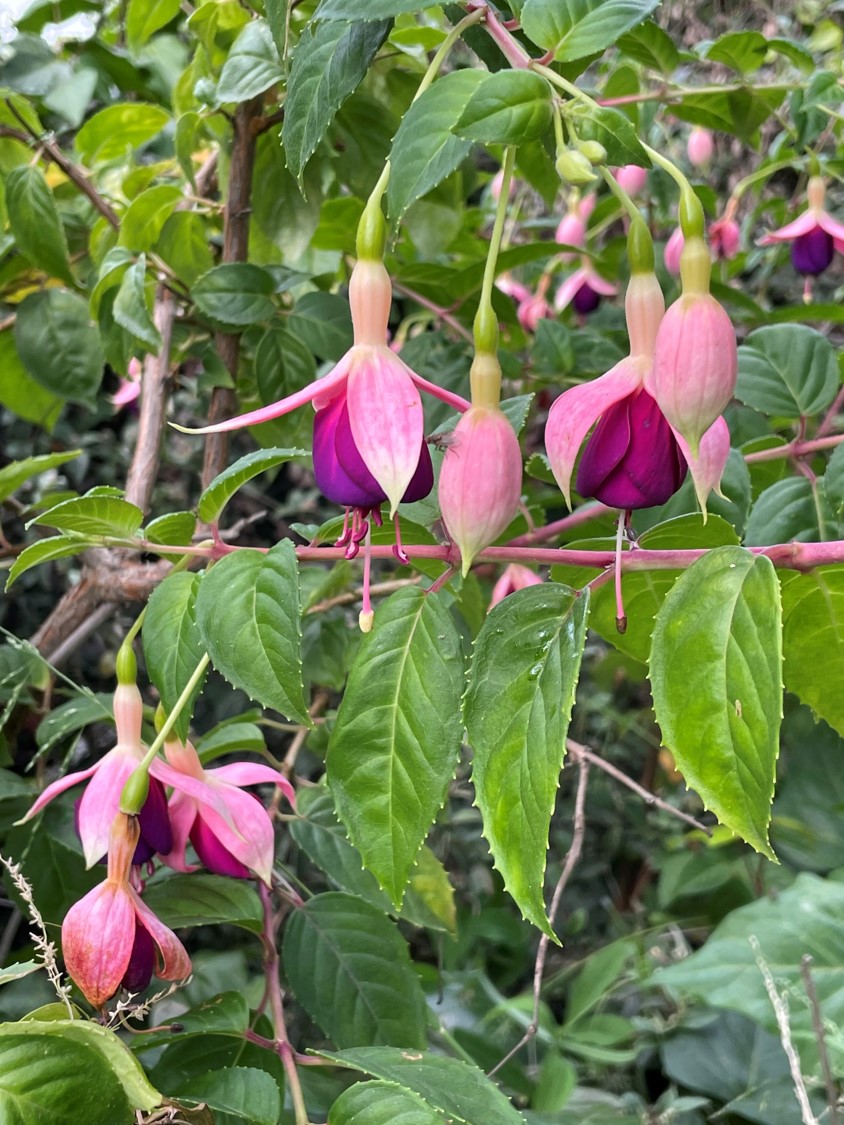
For example, the above photo is a wild Fuchsia (pronounced fyoo – shuh) bush growing in my yard. I invited it to grow there, but that’s another story, like a fairytale most would never believe.

When it was a little teeny tiny, small thing, it was so proud.  It was singular amongst the green, so very proud of finding its way there, of creating new growth, standing tall and, above all, standing out as itself.

It was so proud too of being a Fuchsia, of presenting to the world such a vibrant face of dazzling purples and pinks, a flower like no other.

We greeted each other like new friends, quite happy to meet. I was beside myself with delight to have such a beautiful being want to be with me. And she was elated to be recognized for who she is.

In Spanish, Fuchsia is called Pendientes de Reina, the Queen’s Earrings.  When I told her this, my Fuchsia laughed and said, she actually feels like the Queen herself.

Despite being in an environment that “technically” lacks the nutritious soil that Fuchsias need, my Fuchsia found instead tremendous spiritual nourishment because everyone, all the living beings in my garden and in my yard, were enchanted that the dazzling Fuchsia should join us. The powerful 75-food Pine Tree guarding over her especially enjoys her beautiful company, and she his many years and tall protection.

I’ve been marveling to see the Fuchsia growing stronger and bigger every year, truly spreading her wings.

We now have the beautiful friendship that only gets built over time and quantities of quality conversations. She cheerily greets me in the mornings as I go for my early runs, and warmly welcomes me back at the end of the day when I come home from work.  

My Fuchsia actually smiles.  She blooms whenever she wants to and often.

What my Fuchsia knows, that many don’t, is that when you really take a good look at it for yourself, you realize that you don’t have to live by “the rules”, you can make your own. Ones that make you happy. Pretty much all the living beings in my gardens and around my house think that way too.  It makes for a pretty happy household.

And don’t even get me started on the magnificent, brilliant trees, the bees, the butterflies and the deer.

All living beings communicate.  Communication is what living beings do.  Communication is life, and being alive means you can talk to the world around you and hear what all the other living beings have to say.  I do believe that this plus love is what makes the world go round.

May you be surrounded by beautiful life, flowers that talk to you, and rules of your own making.

Love,

Ingrid

Sun Bath

The cats and I had a Sun Bath Friday afternoon.  It was too beautiful to work.  Warm, blue sky, sunny, flowers blooming in the backyard, soft fragrant breezes, waving lovely colors gently.

The outdoor breezes called to me and I lay down on the patio. The cats seem to think that was a good idea and they all came to lie down on the patio with me. And then the sun washed us.

Sun Bath.

I don’t know if you’ve ever noticed, tell me if you have, but if you let it, sunshine cleans out old cobwebs in your soul.  It gets into all the nooks and crannies deep inside, warms them with sunshine and scrubs out the old dust and grime.

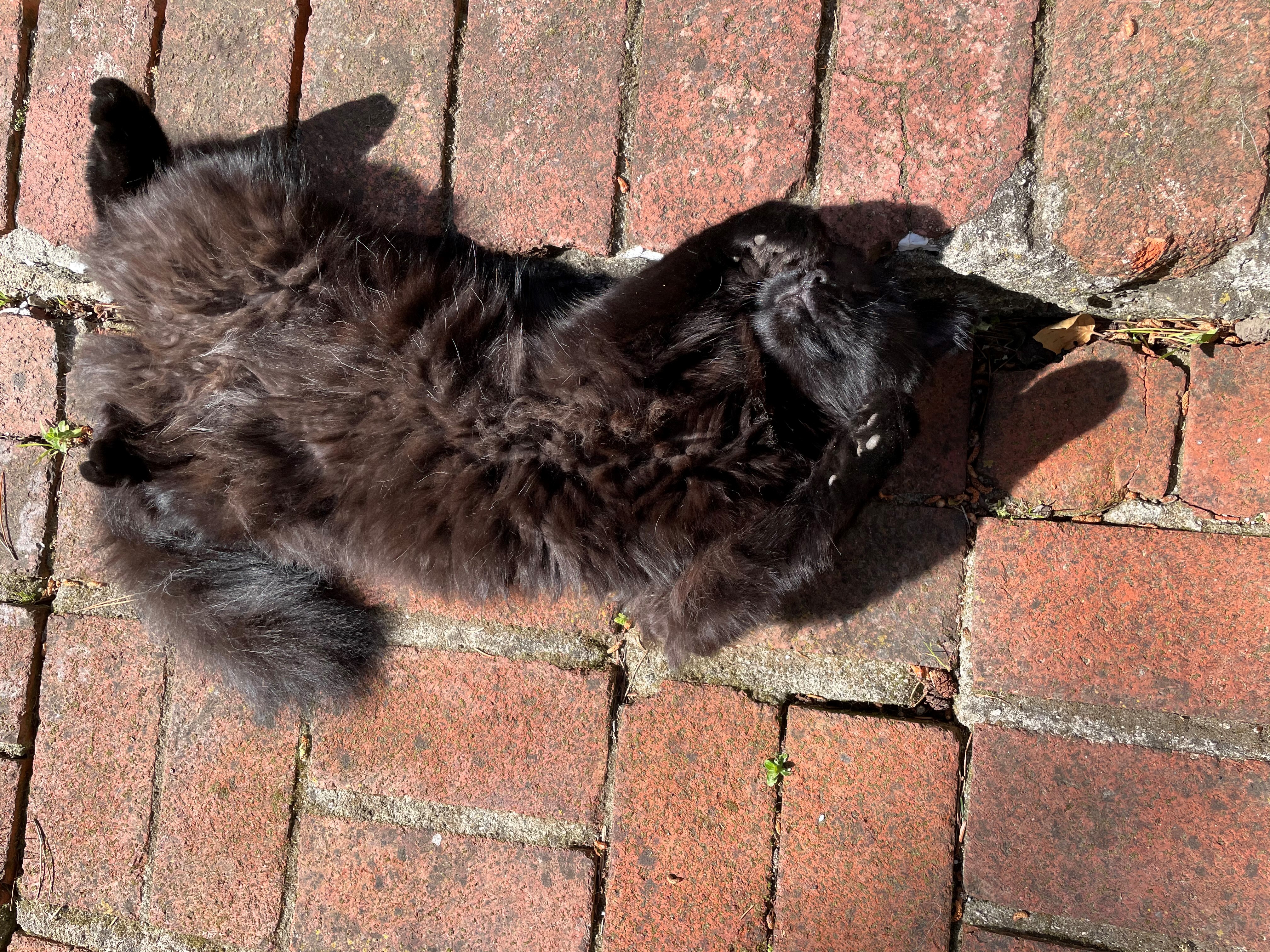
The cats do this rolling around thing that only cats can do, perhaps you’ve seen it, rolling from one side to the other, stretching out their arms, lifting one arm in the air, lying spread-eagled for a moment, then rolling to the other side, lifting the other arm. Must be cobwebs under there.  That photo above is Munchkin luxuriating in the sun, getting his cleaned out.

I didn’t roll around so much, just lay there feeling the sun clean out the winter. Ten minutes and I was washed clean and smelling of sunshine.

A big stretch and I was done. Smiling, smelling good, all clean.

The cats winked at me as I went back inside. 

Wishing you a big dose of sunshine in your own life!  And a very happy Spring!

Love,

Ingrid